






What Is the Difference Between Racking and Shelving?
The main difference between racking and shelving is the load and the way it is handled.

What Is the Difference Between Racking and Shelving?
The main difference between racking and shelving is the load and the way it is handled. Shelving is normally used for individual items, bins and cartons that people place and pick by hand. Racking is engineered for larger unit loads, most commonly pallets, that are handled by forklifts or other mechanical equipment.
The terms are sometimes used loosely, which can cause confusion. Longspan shelving can be large and strong, while small racking systems may look similar from a distance. The correct classification comes from the system's design, load notices and intended operation, not from its colour or the thickness of one upright.
Choosing between them affects capacity, aisle widths, labour, equipment, fire planning, inspection and cost. A warehouse with both pallet reserve stock and item-level picking will often need both systems rather than one universal solution.
Mowbray designs and installs pallet racking, shelving, mezzanine floors and integrated storage areas across the UK. The selection process begins with stock and movement data so that the final layout supports the operation instead of forcing the operation to adapt to unsuitable equipment.
What is warehouse racking?
Warehouse racking is a structural storage system designed around unit loads. Adjustable pallet racking uses upright frames and beams to support pallets at multiple levels. Other formats change the access and density: push-back stores pallets on moving carts, drive-in creates deep truck-entry lanes, VNA reduces aisle width, and pallet flow uses gravity for controlled stock rotation. Racking design depends on much more than the number of pallets. The engineer needs pallet dimensions, bottom-board arrangement, maximum unit load, load height, truck type, lift capacity, aisle requirements and building constraints. The floor slab and fixings form part of the load path.A pallet rack may also contain picking levels or timber decks, but that does not turn it into ordinary shelving. If people pick cartons beneath pallet storage, the arrangement needs appropriate deck protection, clearances, load control and a layout that manages interaction between pedestrians and mechanical equipment. Racking usually reaches higher than shelving and carries greater total loads. That increases the importance of rack protection, damage reporting, recorded inspections and expert assessment. Changes to beams, anchors or bay configuration should not be made without confirming the engineered capacity.
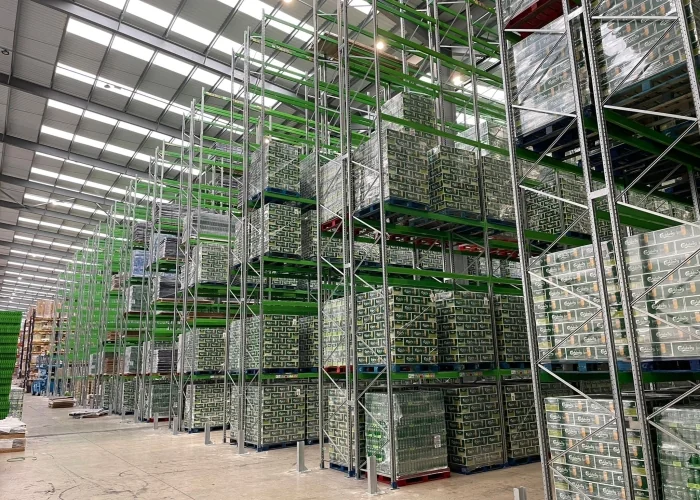
Is longspan shelving racking or shelving?
Longspan is normally classified as shelving because goods are placed and picked manually from decked levels. Its frames and beams resemble small pallet racking, and suppliers may use terms such as medium-duty racking, but its operational role is the deciding factor. It is the useful middle ground for products that exceed the practical size or weight of light shelving but do not remain on pallets. Examples include boxed appliances, automotive components, tyres, tools and bulky retail stock. Longspan should not be loaded with pallets simply because its beams look strong. Palletised unit loads create different support, impact and handling conditions. Where complete pallets are moved by forklift, a pallet-racking design is normally required.How do handling methods change the decision?
A storage system should follow the smallest unit at which stock is routinely moved. If inbound goods arrive on pallets but staff break them down into cartons for every order, pallet racking may provide reserve storage while shelving creates the forward-pick area. If full pallets are despatched, direct pallet access may be important. If several pallets of each product are held, a dense system such as push-back or drive-in could reduce aisle space. Where staff select individual products, shelving, bins or carton flow normally provides better visibility and reach. The handling equipment must be designed into the layout. Forklift turning circles and lift height affect pallet-racking aisles. Trolleys, order-picking steps and pedestrian routes affect shelving aisles. Combining them without separating traffic can produce congestion and safety risk.
Which system uses warehouse space better?
Neither is automatically more space-efficient. Pallet racking can use greater clear height and carry dense unit loads, but it requires aisles and may leave empty positions when pallet quantities vary. Shelving can offer excellent SKU density for small products, but excessive depth or height can make stock inaccessible. Usable capacity matters more than the number of lines on a drawing. A pallet position that cannot be filled because the wrong SKU is in front is not practically available. A deep shelf filled with invisible slow-moving parts may increase inventory errors rather than efficiency. A mixed design often makes best use of the cube. Pallet racking stores reserve stock at height. Longspan or smaller shelving creates ergonomic pick faces. A mezzanine may add a second level for light manual picking, while cantilever racks hold long products that waste space in standard bays.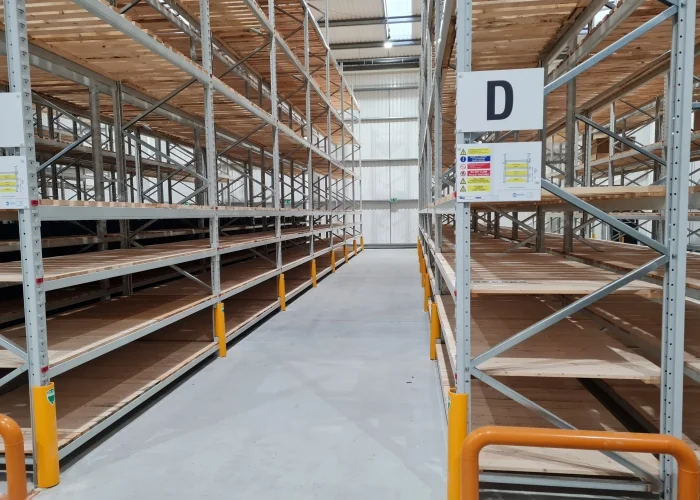
Cost differences between racking and shelving
Shelving is usually less expensive per bay than pallet racking because it carries smaller loads and does not require the same scale of structure. That does not mean the lowest purchase cost delivers the lowest operating cost. Labour, replenishment time, stock accuracy and property utilisation can outweigh the equipment price. Pallet racking quotations should include design, delivery, installation, floor fixings, load notices and any required protection. Shelving quotations should identify deck type, shelf and bay loads, restraint or fixing requirements, accessories and installation. Comparing an installed racking price with a supply-only shelving price will not produce a useful decision. The business case should measure cost per usable location and cost per order handled, not only cost per bay. A more expensive system can be justified when it creates additional capacity, improves picking or avoids a building move.
Safety differences
Shelving risks often centre on manual handling, falling goods, unstable bays, overloaded levels and unsafe access. Staff should not climb on shelves. Heavy products need appropriate storage height, and protruding stock should not obstruct aisles. Racking adds vehicle impact, greater stored energy and high-level unit loads. Pallets must be suitable and correctly positioned. Uprights, beams, braces, anchors and protectors need routine observation, formal recorded inspections and competent expert review at intervals based on the operation and applicable guidance.Both systems need clear load information. Terms such as heavy duty are not an operating limit. The maximum shelf load, bay load or unit load must be documented for the actual configuration. Fire and escape planning apply to the complete layout. Storage should not compromise fire doors, exits, sprinkler clearances or access routes. Changing shelf or rack height can affect detection, lighting and fire-fighting arrangements, so expansion should be coordinated rather than improvised.
How to choose between racking and shelving
The next step is to quantify the answer. Record product dimensions, maximum weights, quantity per SKU, pallet type, daily picks, replenishment frequency and seasonal peaks. Map goods-in, reserve storage, picking, packing and despatch. This reveals where full pallets stop and manual handling begins. A storage survey should also record clear height, column positions, doors, services, sprinklers, slab condition and vehicle routes. The system can then be selected against real constraints. Avoid choosing only from today's stock. The design should allow for realistic growth and changes in product mix, while remaining efficient at normal inventory levels. Overbuilding for an unlikely peak can create large empty locations; designing only for the average can force overflow during busy periods.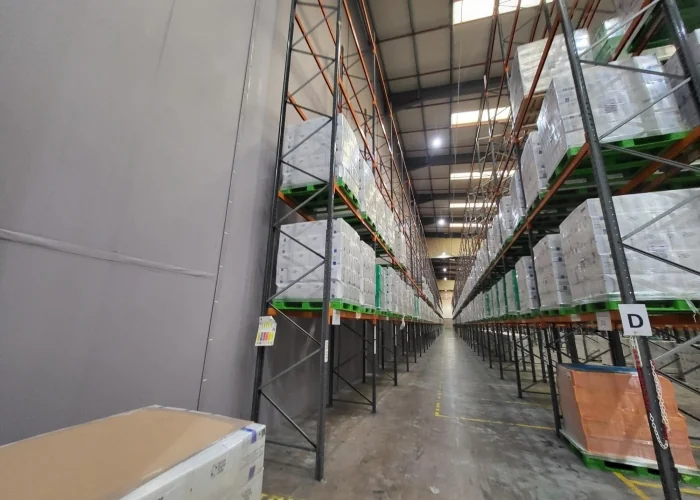
Can racking and shelving be combined?
Yes, and combined systems are common. Adjustable pallet racking can hold reserve pallets above decked manual-picking levels. Separate shelving rows can sit beside a packing area, replenished from nearby pallet reserve stock. Longspan can be built beneath or on a mezzanine where the structural design supports it. The combination should be planned as one workflow. Replenishment should not block active pick aisles. Pedestrians should not be expected to work in an unprotected forklift route. Location numbering should connect reserve and forward stock, and the inventory system should define when replenishment occurs. A coordinated design also prevents conflicts between rack uprights, shelving bays, mezzanine columns, lighting and sprinklers. These conflicts are harder and more expensive to resolve after equipment has been ordered.Planning an integrated storage layout with Mowbray
Mowbray can survey the building and review the stock profile before recommending a system mix. The design can include pallet racking, shelving, longspan, cantilever storage, mezzanine floors, protection and workplace fit-out elements.The proposal should show usable capacities and operating assumptions, not only equipment quantities. It should state load limits, handling methods, aisle dimensions, installation scope and any work needed to existing services or fire arrangements.
A measured survey and stock analysis provide a more reliable answer than a generic capacity percentage. To discuss a layout, call Mowbray on 01572 827206, contact the Northern Office on 0113 403 1160 or email info@mowbrayltd.co.uk.
FAQs
- Is shelving safer than pallet racking?
Neither system is automatically safer. Risk depends on design, load, installation and use. Shelving has manual-handling and stability risks, while racking adds forklift impact and high-level pallet loads. Both need documented limits, inspections and trained users.
- Can I store boxes on pallet racking?
Boxes can be stored on approved decks or within suitable pallets and containers, but the level must be designed for the support and load. Loose cartons should not be placed on beams without a deck intended for that purpose.
- Can forklifts load longspan shelving?
Longspan is normally for manual loading. Using a forklift introduces impact and unit-load conditions that may fall outside its design. Pallet racking or a specialist engineered system should be considered.
- What is industrial shelving?
Industrial shelving is a broad term for robust workplace shelving used in warehouses, factories and stores. It can include small-parts systems, steel shelving and longspan. The term alone does not confirm capacity.
- Which is better for e-commerce storage?
E-commerce operations often use shelving or longspan for item-level picking, supported by pallet racking for reserve stock. The best mix depends on product dimensions, order profile and replenishment frequency.
- Can Mowbray alter an existing mixed storage area?
Mowbray can assess a proposed extension or reconfiguration. Existing equipment should be identified and checked before components are moved or mixed, and the new arrangement must retain the required loads, clearances and safety controls.