






What Is Longspan Shelving?
Longspan shelving is a modular storage system designed for medium to heavy goods that are usually loaded and picked by hand.

What Is Longspan Shelving?
Longspan shelving is a modular storage system designed for medium to heavy goods that are usually loaded and picked by hand. It uses upright frames and horizontal beams to create wider, stronger shelf levels than typical office or light-duty shelving. Decking sits between the beams and may be formed from chipboard, steel panels, mesh or another material selected for the goods and environment.
The system is commonly used for cartons, automotive parts, tools, boxed products, archives, maintenance spares, retail stock and awkward items that are too heavy or bulky for light shelving but do not need to remain on pallets. It fills the practical gap between small-item shelving and forklift-served pallet racking.
Longspan is not one fixed capacity or standard bay size. Beam length, frame depth, deck type, number of levels and load rating are selected for the product range. A safe, efficient installation begins with item data and picking methods rather than simply ordering the largest shelf available.
Mowbray designs, supplies and installs warehouse and workplace shelving systems across the UK. The layout can be coordinated with pallet racking, mezzanine floors, partitioning, packing areas and material-flow routes to create one usable storage plan.
What can be stored on longspan shelving?
Longspan is suited to manually handled products that need clear individual access. Typical examples include boxed electrical items, engineering components, tyres, plumbing products, furniture parts, packaging materials, tools and maintenance stock. It can also support plastic containers and totes where the deck and dividers suit their base dimensions.The broad beam span gives staff access to a continuous shelf without many vertical posts interrupting the pick face. This is helpful for mixed carton sizes and products that do not fit neatly into small compartments.
Long or irregular items may fit on longspan, but very long products such as timber, pipe, bar or sheet materials are often better on cantilever racking. The absence of front columns on cantilever arms makes those loads easier to place and remove. The correct choice depends on the item's length, weight, handling equipment and required support points.
Goods should still be within safe manual-handling limits. A shelf capable of carrying a heavy load does not make that load safe for one person to lift. Heavy or frequently handled items should be stored within an ergonomic zone, or served by appropriate lifting equipment and handling procedures.
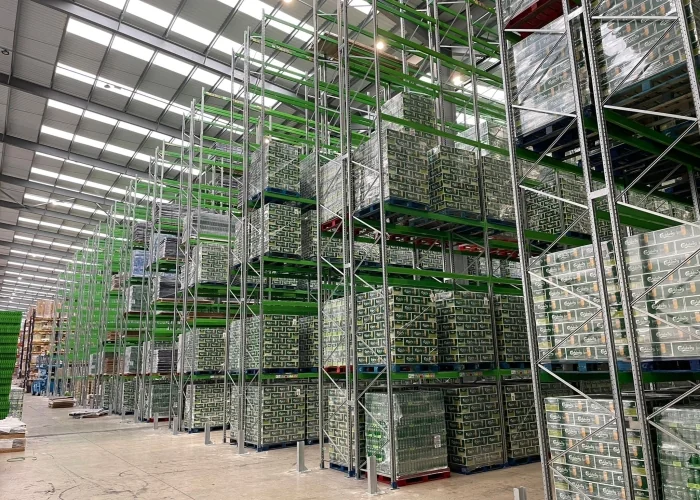
Where does longspan sit between shelving and pallet racking?
The boundaries are based on operation, not only capacity. A strong longspan shelf may carry substantial weight, but it remains a manual-picking system. Pallet racking is engineered around palletised unit loads and mechanical handling. Conversely, light shelving may be perfectly adequate for small items even when the warehouse has space for a heavier product. Some operations combine the systems. Pallets are stored on upper reserve levels, while cartons are opened and placed into longspan pick faces below. A separate longspan zone can also sit next to packing benches, with pallet racking behind it for replenishment stock.Benefits of longspan shelving
Wide, accessible picking faces: Longspan beams create broad shelf openings that can hold different carton sizes without a dense grid of uprights. Staff can see and reach stock directly, which supports faster picking and easier location labelling.

Flexible level positions: Shelf levels can usually be repositioned in increments to suit changing product heights. Reducing unnecessary vertical gaps can increase cubic utilisation without extending the footprint. The change should be planned so that maximum loads, frame stability and safe access remain within the system design.
Higher capacity than light shelving: The stronger frame and beam construction allows heavier stock to be stored than on ordinary office or small-parts shelving. Exact capacities vary widely, so load notices and supplier data must identify the maximum uniformly distributed load per level and the total permitted load per bay.
Straightforward expansion: Extension bays can lengthen a run, and additional rows can be added where aisle and fire requirements permit. Longspan can also be considered within mezzanine or multi-tier storage schemes, subject to structural load checks, escape planning and safe goods movement.
Multiple deck options: Chipboard can provide an economical smooth surface in dry conditions. Steel panels offer a robust, cleanable finish. Mesh can support ventilation, light transmission and some fire strategies. Shelf Dividers can also be added, either adjustable or fixed. The choice must account for point loads, product bases, moisture, cleaning, sprinkler performance and the system manufacturer's approval.
Longspan can be reconfigured, but uncontrolled changes create risk. Staff should not move beams, substitute boards or add extra levels without checking the new arrangement against the manufacturer's load data.
Higher capacity than light shelving: The stronger frame and beam construction allows heavier stock to be stored than on ordinary office or small-parts shelving. Exact capacities vary widely, so load notices and supplier data must identify the maximum uniformly distributed load per level and the total permitted load per bay.
Straightforward expansion: Extension bays can lengthen a run, and additional rows can be added where aisle and fire requirements permit. Longspan can also be considered within mezzanine or multi-tier storage schemes, subject to structural load checks, escape planning and safe goods movement.
Multiple deck options: Chipboard can provide an economical smooth surface in dry conditions. Steel panels offer a robust, cleanable finish. Mesh can support ventilation, light transmission and some fire strategies. Shelf Dividers can also be added, either adjustable or fixed. The choice must account for point loads, product bases, moisture, cleaning, sprinkler performance and the system manufacturer's approval.
What are the limitations of longspan shelving?
TLongspan is not intended to replace pallet racking for forklift-loaded pallets. A pallet placed on a shelf may create concentrated loads and handling risks that the system was not designed to accept. If goods are stored and moved as complete pallets, a pallet racking solution should be assessed. Very deep shelves can make products at the rear difficult to see and reach. They may also encourage staff to climb, overreach or place slow-moving stock behind faster products. Shelf depth should follow the product and picking method, not be maximised simply because floor space is available. Open shelves do not automatically control small loose parts. Bins, dividers, drawers, tote boxes or labelled compartments may be needed. The accessory design should prevent stock from falling into aisles and should not overload the deck at isolated points.Longspan can be reconfigured, but uncontrolled changes create risk. Staff should not move beams, substitute boards or add extra levels without checking the new arrangement against the manufacturer's load data.
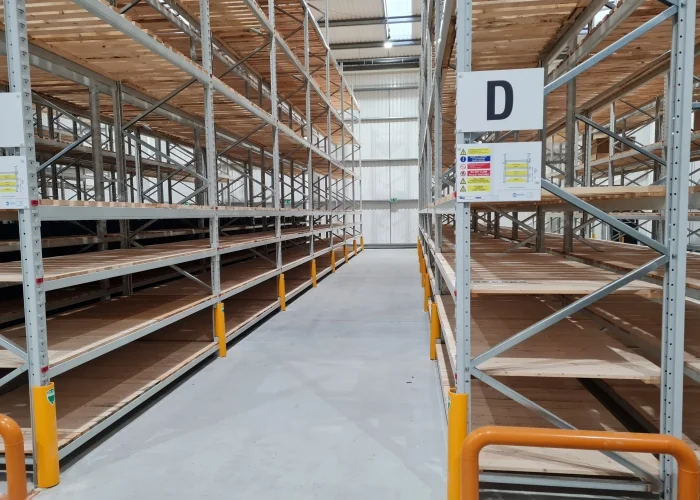
How much weight can longspan shelving hold?
There is no reliable universal figure. Capacity depends on the beam profile and length, frame design, deck material and thickness, number of deck supports, level spacing, bay height, anchoring and whether the load is evenly distributed. A shelf rated for a uniformly distributed load assumes the weight is spread across the level. One dense machine component placed in the centre may behave differently from twenty cartons spread evenly. Point loads, impact and overhang should be disclosed during specification. The total bay load matters as much as the individual shelf load. Four levels each rated for a stated capacity cannot automatically be added to an existing frame unless the complete bay has been designed for the combined weight. The supplier's load notice should make the operating limits clear.How to specify a longspan shelving system
A useful storage survey records representative item sizes and weights, the number of stock keeping units, quantities held, replenishment method and daily pick frequency. The designer can then select bay dimensions that minimise wasted air while keeping products visible and reachable. The aisle should be wide enough for people, trolleys, steps and any handling equipment used in the area. Routes should not create conflicts with forklifts, fire doors or emergency exits. If powered equipment serves nearby pallet racking, pedestrian segregation and impact risk must be considered. Location labelling should form part of the plan. Clear bay and level references help staff put stock in the correct place, support cycle counting and make capacity easier to manage. Labels should remain visible after the shelves are filled.
Longspan shelving on a mezzanine floor
Longspan is often used on mezzanine floors because it creates a high-density manual-picking area above ground-level operations. The arrangement can be effective for parts, e-commerce stock, archives and service components, but the floor must be designed for the actual shelving loads. Dense shelving can impose higher loads than a general office or light storage use. The mezzanine designer needs bay locations, maximum loads, aisle widths and any rolling equipment before the structure is finalised. Goods transfer also needs a safe method, such as a protected pallet gate, conveyor or lift. Carrying heavy cartons up stairs should not become the default replenishment process. Fire protection, travel distances, lighting and emergency arrangements may change when a multi-level storage area is created. Coordinating the shelving and floor through one design process avoids columns blocking bays and prevents a late discovery that the intended stock load exceeds the structural allowance.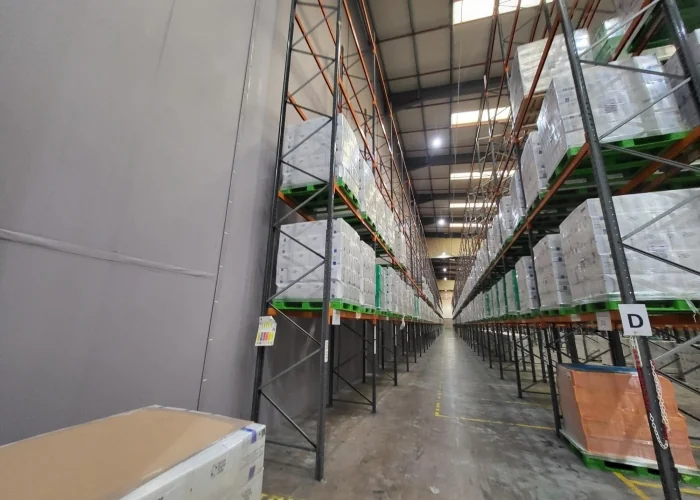
Inspection, housekeeping and safe use
Users should report damaged frames, beams, decks, fixings and accessories. Shelves that are visibly deflected, unstable or struck by equipment should be unloaded and assessed as necessary. Load notices must remain legible, and stock should stay within the stated limits. Good housekeeping reduces trips, falling objects and blocked aisles. Heavy goods should be placed lower, frequently picked stock should sit in the easiest reach zone, and protruding products should not reduce the safe aisle width. Staff should use suitable access equipment rather than stepping on beams or shelves.Where shelving forms part of a warehouse system, inspection frequency should reflect traffic, loading and the likelihood of impact. The risk assessment and manufacturer's instructions should guide the programme.
Planning longspan shelving with Mowbray
Mowbray can review the product range, available height, picking activity and connection with reserve storage. The resulting layout can combine longspan with lighter shelving, pallet racking, packing stations or mezzanine space rather than forcing every item into one bay type.A project proposal should identify bay dimensions, level quantities, deck type, rated loads, accessories, anchoring assumptions, delivery, installation and location labelling. Where the warehouse remains live, the plan should also cover phasing and temporary stock movement.
A measured survey and stock analysis provide a more reliable answer than a generic capacity percentage. To discuss a layout, call Mowbray on 01572 827206, contact the Northern Office on 0113 403 1160 or email info@mowbrayltd.co.uk.
FAQs
- Is longspan shelving the same as heavy-duty shelving?
Longspan is commonly described as medium or heavy-duty shelving, but those terms do not define a standard capacity. The rated load depends on the specific frame, beam and deck combination. Always use the supplier's documented limits.
- Can longspan shelving hold pallets?
It should not be assumed to hold forklift-loaded pallets. Longspan is principally a manual-picking system. Complete pallet loads normally require pallet racking designed for the pallet, truck and weight.
- Does longspan shelving need to be fixed to the floor?
The answer depends on the system, height, depth, loading, configuration and installation instructions. Floor fixing or other restraint may be required. The supplier's design and site risk assessment should determine the correct method. Mowbray recommends fixings where possible as it can limit the risk of toppling and maintains aisle widths from knocks.
- Can the shelves be adjusted later?
Levels are usually adjustable, but the new layout must remain within the approved configuration and bay-load limits. Staff should not change beam or deck components without checking the manufacturer's information.
- Is chipboard or steel decking better?
Neither is always better. Chipboard can be economical for dry, evenly distributed loads. Steel may suit cleaning, durability or moisture requirements. Mesh can aid light and water penetration. Product bases, fire strategy and environment determine the choice.
- Can Mowbray combine longspan shelving with pallet racking?
Yes. A mixed layout can place manually picked goods in longspan and palletised reserve stock in racking. Designing both together helps coordinate replenishment routes, aisle widths and future capacity.