






What Is Cantilever Racking?
Cantilever racking is an open-fronted storage system for long, bulky or irregular loads.

What Is Cantilever Racking?
Cantilever racking is an open-fronted storage system for long, bulky or irregular loads. Instead of front uprights and horizontal pallet beams, it uses vertical columns with arms that project out to support the goods. The clear face allows timber, pipes, steel sections, boards, furniture components and similar products to be placed along the rack without front posts obstructing the load.
The system can be single-sided against a wall or double-sided as a free-standing row. Arms are positioned at levels that support the product safely and may be adjusted within the approved system configuration. Loads can be placed manually or by forklift, depending on their weight, size and the rack design.
Cantilever racking is simple in appearance but requires careful engineering. The length, weight, stiffness and centre of gravity of the goods affect upright spacing, arm length, capacity, base design and floor fixings. A generic bay selected by eye can leave a load under-supported or create forces beyond the stated capacity.
Mowbray already provides a dedicated cantilever racking design and installation service. This guide answers the educational search question, while the service page remains the primary route for surveys, quotations and project delivery.
Main cantilever racking components
Upright columns:The columns carry the arm loads and transfer forces to the base and floor. Their height, section and spacing are selected for the complete row. Holes or connection points allow approved arms to be positioned at different levels.
Cantilever arms:
Arms support the goods and may be straight or slightly inclined depending on the product and system. End stops or lips can help prevent cylindrical or loose items rolling off, but they are not a substitute for correct load placement and restraint.
Bases:
The base provides stability and normally projects forward beneath the lowest storage level. It may also carry goods where designed to do so. Base capacity, floor anchors and slab suitability form part of the engineering.
Bracing:
Horizontal and diagonal braces connect the uprights along the row. They maintain spacing and provide longitudinal stability. Bracing zones should not be used as unapproved storage positions or removed to create access.
Stops, dividers and accessories:
Pins, end stops, dividers, roof supports and load identification may be added for the product. Outdoor systems can include canopies, but wind, snow, drainage and building interfaces then become part of the structural design.
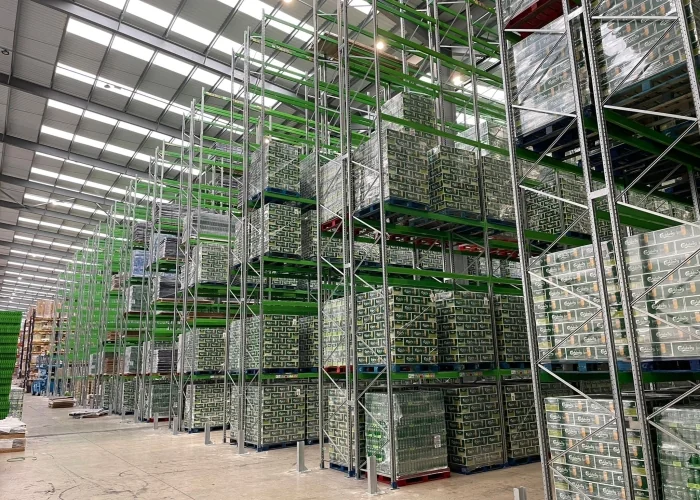
Common cantilever configurations
The same warehouse can use more than one configuration. Heavy packs may be forklift-loaded on lower arms, while lighter individual lengths are selected manually from a segregated area. The design should prevent staff from working beneath suspended loads or entering an active handling zone.What products are suitable for cantilever storage?
Cantilever racking is widely used for timber, metal bar, pipes, tubes, extrusions, plastic profiles, sheet materials, worktops, doors, furniture and rolled products. It is particularly useful when load lengths vary or when front columns would make access difficult. The product still needs enough rigidity or suitable dunnage to bridge between supports. A bundle that bends sharply can be damaged or become unstable. Load separators, bearers or cradles may be required for delicate finishes, cylindrical products or mixed lengths.
Palletised goods are usually better stored on pallet racking because pallets need continuous, predictable support at defined points. Cantilever can carry some specialised unit loads, but only where the system has been designed for their shape and handling. Very small items may be inefficient on open arms. Longspan shelving with decks and dividers can provide better containment and item-level picking when products are shorter and manually handled.

Benefits of cantilever racking
Clear access along the load face:The absence of front uprights allows a forklift to approach long loads without threading them between vertical posts. Products can extend across bays, and variable lengths can share a run where the support and stock-control plan permits.
Better use of height for long products:
Goods that are otherwise stacked on the floor can be separated into vertical levels. This releases floor area, improves visibility and reduces the need to move one bundle to reach another. The gain is especially valuable for businesses holding multiple lengths, grades or finishes.
Adjustable arm levels:
Approved arms can often be repositioned to suit changing product heights. This reduces wasted vertical clearance, although any change must maintain the permitted number of levels, load distribution and bracing arrangement.
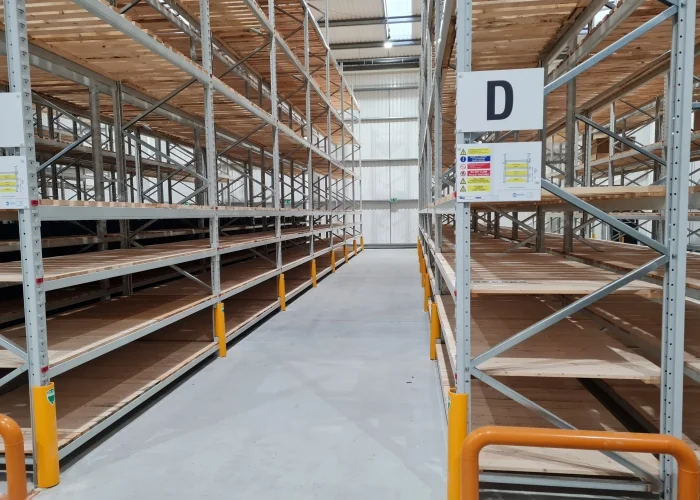
Single or double-sided layouts:
A single-sided run can use a perimeter, while a double-sided row serves two aisles and can improve the storage-to-aisle ratio in an open building. The best arrangement depends on flow, truck turning and picking sequence.
Product protection and organisation:
Separating loads by arm level can reduce crushing and make stock identification easier. With location labels and defined capacities, staff can place products consistently rather than building unstable floor stacks.
Open fronts improve access but provide less inherent containment. Cylindrical items require stops, cradles or secure bundling. Uneven loading, damaged bands or stock projecting into aisles can create serious risk. The system is efficient for long goods but may not provide high density for short cartons. A mixed solution is often better than using cantilever for products it was not designed to hold.
A single-sided run can use a perimeter, while a double-sided row serves two aisles and can improve the storage-to-aisle ratio in an open building. The best arrangement depends on flow, truck turning and picking sequence.
Product protection and organisation:
Separating loads by arm level can reduce crushing and make stock identification easier. With location labels and defined capacities, staff can place products consistently rather than building unstable floor stacks.
Limitations and design challenges
Cantilever racks carry unbalanced loads away from the upright, so the structure can be heavy and requires suitable foundations or slab capacity. Outdoor systems also face wind and weather loads that may dominate the design when the rack is empty or partly loaded. Long loads need generous handling space. The forklift may carry a wide bundle that sweeps through a large arc when turning. Aisle width based only on the truck body can be unsafe and operationally unusable. Side-loader or multidirectional trucks may reduce aisle requirements for some operations, but equipment compatibility must be checked. For a direct comparison, see Difference Between Racking and Shelving.Open fronts improve access but provide less inherent containment. Cylindrical items require stops, cradles or secure bundling. Uneven loading, damaged bands or stock projecting into aisles can create serious risk. The system is efficient for long goods but may not provide high density for short cartons. A mixed solution is often better than using cantilever for products it was not designed to hold.

How is cantilever capacity calculated?
The load on one arm is not simply the total bundle weight divided by the visible number of arms unless every support shares the load as assumed. Uneven bundles, product stiffness and placement can change the distribution. The designer should use the maximum realistic product and account for how it is lifted and set down. Capacity information should identify the permitted load per arm, per upright side and for the complete bay or row configuration where relevant. Operators need legible load notices and a location plan that prevents a heavier product being placed on a level intended for lighter stock. If product dimensions or handling methods change, the original capacity should be reviewed. Moving arms closer together may appear safer for the product, but adding levels can increase total column load. Substituting longer arms changes leverage on the uprightCantilever racking compared with pallet racking
Pallet racking supports standardised unit loads between front and rear beams. It provides compact bays and can offer direct access to each pallet. Cantilever supports products along projecting arms and leaves the front open for long-load access. Use pallet racking when goods remain on suitable pallets and the forklift handles them as unit loads. Use cantilever when the product length or shape makes front uprights restrictive. Some warehouses require both: pallet racking for packaged stock and cantilever for raw materials or fabricated lengths. Cantilever should not be created by removing beams or uprights from pallet racking. The two systems resist loads differently. Any conversion requires an engineered design, not an improvised modification. For related project information, see How to Maximise Warehouse Storage Space.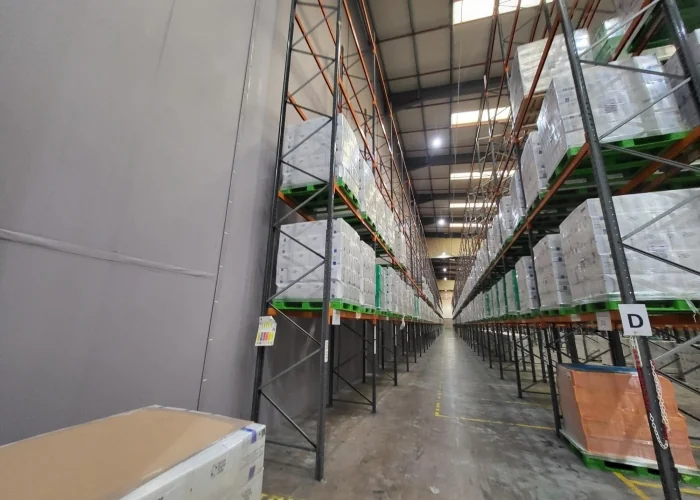
Indoor and outdoor cantilever racking
Indoor racks are protected from direct weather but still need an environment-appropriate finish. Moisture, chemicals or wash-down processes may require more than a standard coating. Outdoor cantilever requires additional assessment. Wind can act on stored sheets, timber packs, signage and canopies. Rain and snow affect surfaces and load condition. Drainage, corrosion protection, ground foundations, vehicle impact and site security all influence the design. A canopy attached to the rack creates new structural forces and may involve planning, Building Regulations or fire considerations. It should be designed with the rack rather than added later without approval.Safe loading and inspection
Forklift operators should approach squarely, lift the product clear of the arms and avoid dragging bundles across supports. Loads need to be centred and should not project in a way that reduces aisle safety. Staff must remain outside the handling zone while goods are suspended. Damage to arms, columns, braces, bases, anchors or welds should be reported immediately. A downward-bent arm, missing stop or displaced brace can change the way a load is supported. The rack should be inspected through regular user checks, recorded visual inspections and competent expert assessment suited to the risk and system. Housekeeping is important around projecting bases. Aisles, pedestrian routes and emergency access should remain clear. Protective barriers may be required where vehicles can strike column bases or end uprights.Planning cantilever racking with Mowbray
A site survey should record the longest, shortest, heaviest and most flexible loads, plus bundle dimensions and quantities. Mowbray can then model upright spacing, arm levels, single or double-sided rows, handling equipment and available clear height.The proposal should state load assumptions, arm and bay capacities, finish, anchors, accessories, protection and installation scope. Where outdoor use or a canopy is planned, the structural and approval requirements need to be defined from the outset. For a project-specific discussion, contact Mowbray.
A measured survey and stock analysis provide a more reliable answer than a generic capacity percentage. To discuss a layout, call Mowbray on 01572 827206, contact the Northern Office on 0113 403 1160 or email info@mowbrayltd.co.uk.
FAQs
- Why is it called cantilever racking?
The storage arms project from the upright and carry load without a support at their outer end. This projecting structural form is a cantilever.
- Can cantilever racking be double-sided?
Yes. Double-sided columns support arms on both faces and are accessed from two aisles. The row, bracing, base and loading must be designed for the chosen configuration.
- Does cantilever racking need to be bolted down?
Heavy-duty systems normally rely on engineered floor fixings or foundations as part of their stability. The exact anchor design depends on the rack, load and substrate. Installation instructions and structural calculations should be followed.
- Can cantilever arms be moved?
Many systems have adjustable arms, but they should be moved only within approved positions and capacity rules. Adding levels or changing arm length can alter column and base loads.
- Is cantilever suitable for outdoor use?
It can be designed for outdoor use with appropriate finish, foundations and wind, weather and drainage assessment. An indoor rack should not simply be relocated outside without engineering review.
- Can Mowbray design racking for timber and steel?
Yes. The design process uses the actual product lengths, weights, bundle sizes and handling method to select supports and capacities for timber, metal or other long loads.