






Does Pallet Racking Need to Be Bolted Down?
Yes, pallet racking used in areas with forklifts, order pickers or other mechanical handling equipment should generally be securely fixed to a suitable floor in accordance with the manufacturer’s design.

Does Pallet Racking Need to Be Bolted Down?
Yes, pallet racking used in areas with forklifts, order pickers or other mechanical handling equipment should generally be securely fixed to a suitable floor in accordance with the manufacturer’s design. HSE guidance states that free-standing racks should not be used where lift trucks or mechanical handling equipment operate, and drive-in or drive-through racking should always be floor-fixed to the manufacturer’s instructions.
The correct term is usually floor anchoring rather than simply “bolting down”. The number, type and position of anchors form part of the engineered rack design. Installers must consider baseplates, frame height, load, rack geometry, concrete strength, slab thickness, joints and hidden services. Choosing a generic bolt from a hardware catalogue is not a safe substitute.
Mowbray designs and installs pallet racking across the UK and can assess the slab, system and operating environment before specifying fixings.
The correct term is usually floor anchoring rather than simply “bolting down”. The number, type and position of anchors form part of the engineered rack design. Installers must consider baseplates, frame height, load, rack geometry, concrete strength, slab thickness, joints and hidden services. Choosing a generic bolt from a hardware catalogue is not a safe substitute.
Mowbray designs and installs pallet racking across the UK and can assess the slab, system and operating environment before specifying fixings.
The rack manufacturer decides the anchor arrangement
The rack designer calculates or specifies the baseplate and fixing arrangement for the approved layout. This may include one or more anchors per footplate, particular hole positions, anchor diameters, embedment depths and installation torque. Different upright types or load cases can require different details within the same warehouse. The installation drawing and technical manual should be available to the contractor. If the racking has been moved and the original information is missing, a competent supplier should identify the system and assess it before new holes are drilled. Substituting anchor type, reducing the number or using an unapproved baseplate hole can change performance. Any variation should be authorised by the system designer.Fixing to concrete, not just screed
Warehouse floors often have a concrete structural slab with a thinner screed or surface finish above it. Anchors need sufficient engagement in suitable concrete. A thick but weak screed cannot be assumed to provide structural capacity. The installer may need information on slab thickness and concrete strength. Core samples, pull-out testing or engineering review can be appropriate where records are unavailable or the floor is unusual. The design must also consider how close anchors sit to slab edges, joints, cracks and previous holes. Where the slab is unsuitable, options may include local repair, resin systems, redesigned baseplates, revised rack positions channels to spread the load or dedicated foundations. The answer should come from engineering, not from adding longer bolts without evidence.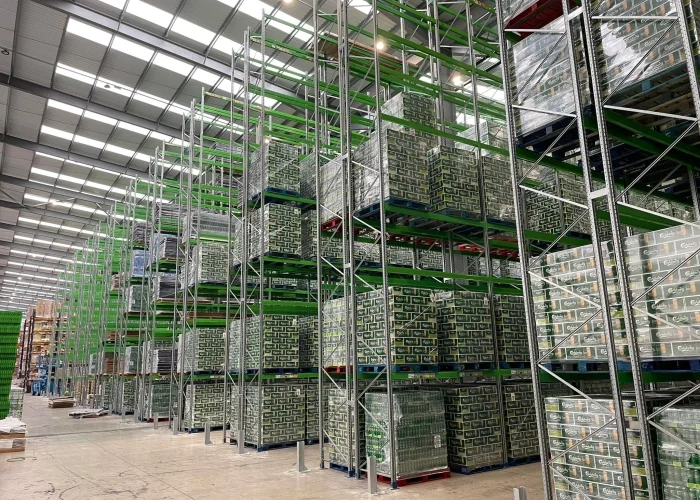
Specialist and reinforcement
Drilling can encounter reinforcement, post-tensioning tendons, electrical conduits, heating pipes or drainage. Damage to a tendon or live service can be serious. Existing drawings, service detection and reinforcement scanning may be required before installation. Post-tensioned slabs need particular care and specialist information. No contractor should drill on the assumption that an apparently clear floor is empty below the surface. The survey should identify high-risk areas and agree a method before the rack components arrive. If an anchor position cannot be used, the alternative must be approved rather than improvised on site.Levelling and shimming baseplates
Anchors should not be used to pull a twisted frame down onto an uneven floor. Uprights need full, stable bearing. Approved steel shims or grout may be used in accordance with the rack system requirements to correct local level differences. Excessive or unstable packing can affect load transfer. The rack must remain plumb within the specified tolerances, with anchors tightened after alignment. Floor flatness becomes increasingly important for tall systems and VNA trucks. A handover check should record that frames are aligned, baseplates are supported and anchors are installed correctly.
Can racking be fixed to asphalt or block paving?
Normal pallet racking anchors are designed for suitable concrete, not asphalt, loose paving or an unknown composite floor. Outdoor or unusual installations may require concrete pads, foundations or another engineered support. The environment also affects corrosion, drainage and wind loading. A rack inside a warehouse and a structure in an open yard are not the same design problem. The supplier needs to know the location and exposure before specifying the system. Never assume that a heavy rack will remain stable simply because the baseplates do not visibly move during loading.What about racking attached to walls or the building?
Pallet racking is commonly designed as a self-supporting system fixed to the floor. Tying it to walls, roof columns or cladding without engineering approval can transfer forces into parts of the building that were not designed for them. Building movement may also impose load on the rack. Where a top tie or building connection is required, it must be designed by competent engineers with information about both structures. Informal straps and site-fabricated brackets are not substitutes. Likewise, back-to-back rack ties connect rack rows to each other but do not normally remove the need for floor anchors.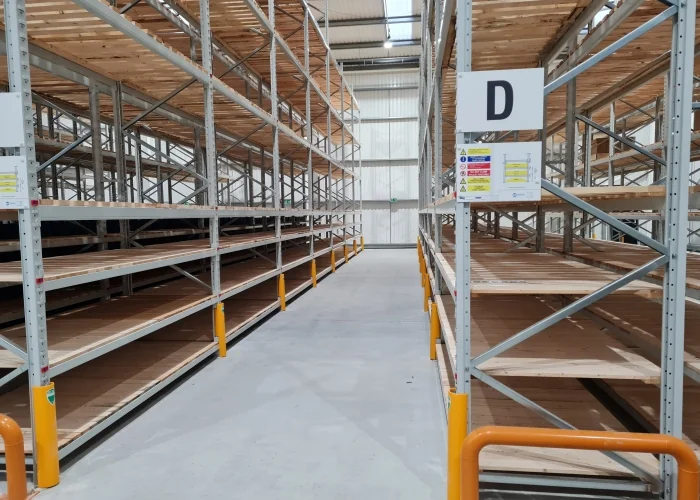
Are all rack feet fixed?
The approved design determines the arrangement. In many industrial pallet-racking systems, each upright footplate is anchored. Some low manual systems may use different minimum rules, but the warehouse operator should not decide to leave selected feet unfixed for convenience. End frames, high-risk locations and deep-lane systems can require additional attention. Column guards and end barriers have their own fixings and should be installed without weakening the rack baseplate or conflicting with its anchors. If an anchor is missing during inspection, the location should be assessed against the system specification and repaired promptly.Relocating pallet racking
Racking that is moved needs new approved fixings. Old anchors should not simply be bent over, and baseplates should not be positioned across damaged holes without review. Components should be inspected during dismantling and any distorted or corroded parts removed from service. The new layout may create different frame loads, heights or aisle risks, so the system should be redesigned rather than copied blindly. New load notices and drawings are required. The slab at the new location must also be suitable. A professional relocation includes controlled unloading, safe dismantling, component identification, installation, anchoring and handover.
Inspecting anchors in service
Regular racking checks should look for missing, loose, pulled or corroded anchors, cracked concrete and movement around baseplates. Impact can elongate holes or deform the footplate even when the bolt remains present. Debris or product around rack feet should be cleared so the condition is visible.Do not tighten or replace anchors without understanding why they became loose. Repeated movement can indicate impact, slab damage, incorrect installation or structural distortion. A competent person should assess the rack and substrate.
Expert racking inspections at intervals no greater than 12 months provide a further opportunity to review fixings and damage patterns.
Common unsafe shortcuts
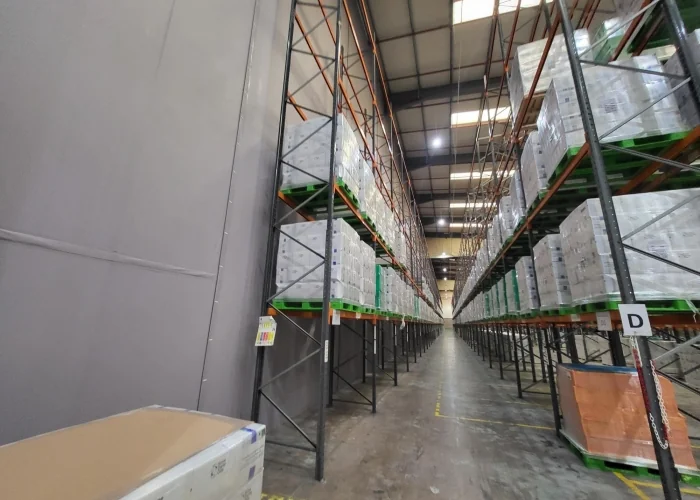
Leaving racks unanchored so they can be moved easily is unsafe in a forklift warehouse. Using fewer fixings than shown, drilling shallow holes, anchoring only end frames, mixing anchor types and fixing into screed are other common problems. So is drilling through a baseplate after erection because the intended hole clashes with reinforcement, without design approval.Site welding plates to make them fit can damage protective coatings and alter the engineered system. Packing baseplates with timber or loose washers is not acceptable levelling.
These shortcuts usually save very little compared with the value of the stored goods and the consequence of instability.
Arrange a compliant racking installation
Mowbray can survey the warehouse, assess the layout and floor, specify a suitable pallet-racking system and complete the installation with approved fixings, protection, load notices and handover documentation. Existing systems can also be inspected before alteration or relocation.Call 01572 827206, contact the Northern Office on 0113 403 1160 or email info@mowbrayltd.co.uk.
FAQs
- Can pallet racking stand without bolts while it is empty?
Components may be temporarily stabilised during controlled installation, but an unfinished rack should not be released for use. The completed system must have the fixings and checks required by the design before loading.
- How many anchors does each upright need?
There is no universal number. The rack manufacturer or designer specifies the quantity, type and positions for the baseplate and load case. Follow the approved drawing and installation manual.
- Can I anchor pallet racking through a screed?
The anchor needs adequate embedment in suitable structural material, normally concrete. Screed thickness and condition must be allowed for. The fixing supplier and rack designer should confirm the detail.
- Do back-to-back ties replace floor fixings?
No. Row ties can connect adjacent frames and control spacing, but floor anchors still perform a separate structural function. Use both as shown in the system design.
- Can I reuse the old anchors when relocating racking?
Normally new approved anchors are installed at the new location. Reuse should not be assumed, and the new slab and layout need assessment. Old holes must be dealt with safely.
- What should I do if a floor bolt is loose?
Stop and assess the affected area, especially if there is movement or impact damage. Do not simply retighten it repeatedly. A competent person should check the anchor, baseplate, upright and concrete.